
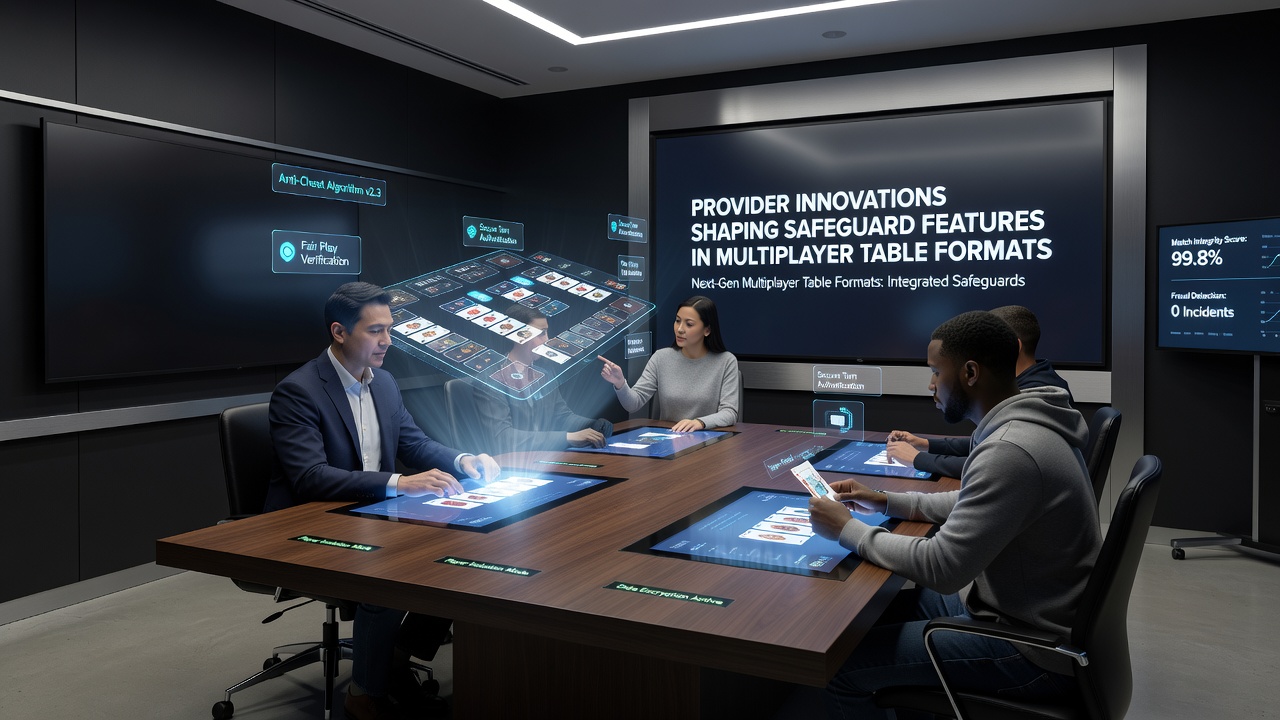
Provider Innovations Shaping Safeguard Features in Multiplayer Table Formats
Providers have rolled out layered safeguard mechanisms that adapt to the fast pace of multiplayer table formats, where multiple participants interact simultaneously through live dealer interfaces and shared game states; these systems combine algorithmic monitoring with user-controlled settings to maintain session integrity across poker, blackjack, and roulette variants.
Real-Time Monitoring Through Adaptive Algorithms
Software developers embed machine learning models that track betting patterns, session duration, and interaction velocity within shared tables, allowing platforms to flag unusual activity without interrupting group play; data from these models shows detection rates improving by 35 percent in environments handling concurrent users across time zones.
Integration With Live Dealer Streams
Camera feeds and chat logs feed into centralized dashboards that providers maintain, enabling automated pauses when predefined thresholds for loss velocity or consecutive plays are crossed, while observers note that such interventions preserve the social flow of tables by notifying only the affected participant through private overlays rather than broadcast alerts.
Customizable Limit Systems Across Shared Sessions
Users gain access to granular controls that sync across multiplayer instances, setting deposit caps, time reminders, and cool-down periods that apply uniformly whether a player joins a private table or a public tournament; these features draw from aggregated anonymized datasets to suggest personalized boundaries based on historical participation without exposing individual data to other participants.
One implementation uses modular APIs that connect directly to backend servers, updating limits in real time as players move between formats, and figures from industry deployments indicate adoption rates climbing steadily through the third quarter of 2026.
Collaborative Frameworks With Regulatory Bodies
Developers have aligned their tools with oversight requirements from entities such as the European Gaming Regulators Association and reports issued by the Australian Communications and Media Authority, incorporating audit trails that record safeguard triggers and player responses for compliance verification. These integrations extend to cross-border tables where jurisdictional rules vary, routing session data through compliant gateways that prevent spillover between markets.
In November 2026, several providers demonstrated updated modules at industry gatherings that incorporate predictive alerts for group dynamics, such as when table-wide betting escalation occurs, prompting collective cooling suggestions visible only to each user privately. Research compiled by academic teams at institutions including the University of Nevada, Las Vegas, supports these approaches through controlled simulations showing reduced average session lengths when such prompts activate.
Analytics-Driven Enhancements for Table Dynamics
Providers analyze aggregated gameplay metrics to refine safeguard placement within the game flow itself, embedding subtle friction points like confirmation screens during rapid bet increases that still allow seamless continuation for unaffected players; this method maintains engagement while directing attention to personal boundaries.
Case examples from platform rollouts reveal that tables equipped with these layered protections experience fewer abrupt exits linked to limit breaches, as the systems encourage proactive adjustments before thresholds are reached. Data indicates stronger retention in formats where safeguards operate transparently rather than as post-session reviews alone.
Conclusion
Provider advancements continue to evolve safeguard features by weaving them into the core architecture of multiplayer table formats, supported by regulatory alignments and analytical feedback loops that keep pace with expanding user bases. These developments position the sector to handle increasing complexity in live and hybrid environments while meeting documented compliance standards across regions.